
OBM 130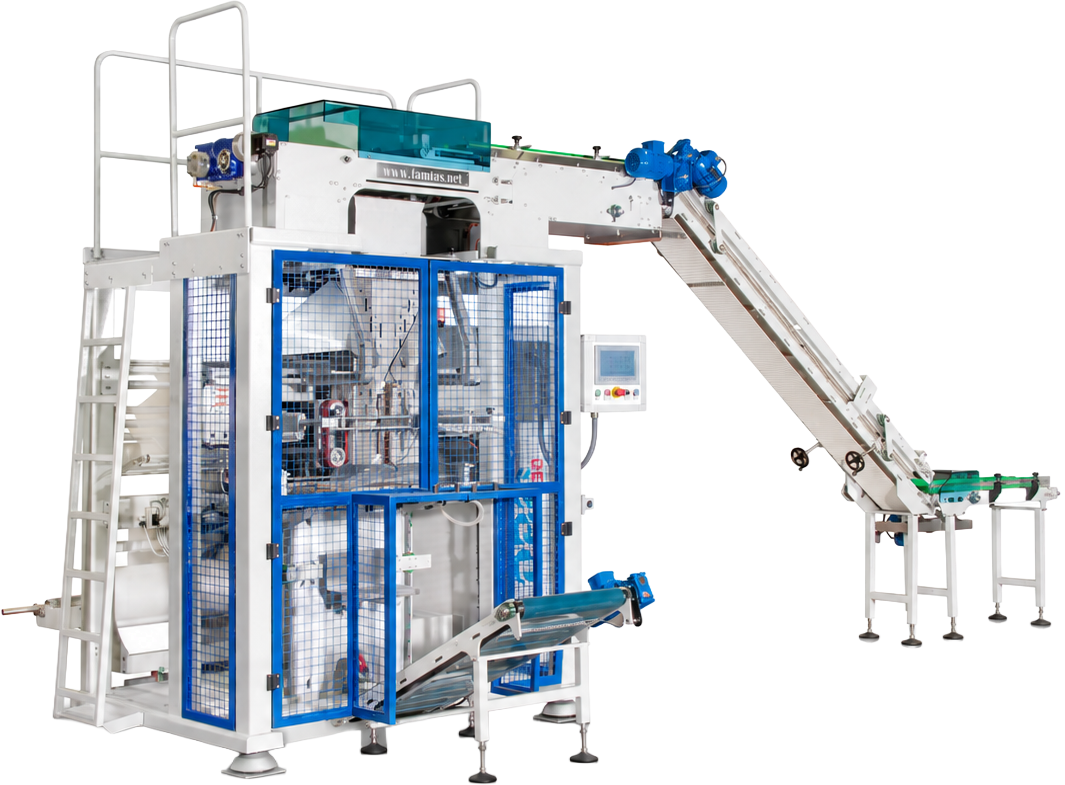
OBM 130
Fully automatic bundling machineCounts and arranges packs and fills and seals them into an LDPE bale bag; secondary packaging cost is lower than with cases.200–5000 gWeight4–6bundles/min
View machine Fully automatic end-of-line machines that count the pouches coming from packaging machines, group them in the required pattern and fill and seal them into an outer bale bag. For products such as pulses, flour, sugar, tea and pasta, they make shipping-ready bales at a lower secondary packaging cost than cases.
A bundling machine is an end-of-line machine that automatically takes the small packs coming from packaging machines, groups them in the required number and pattern, and fills and heat-seals the group into an outer bale bag. It is also called a baling machine or bale bagging machine.
Secondary packaging costs are clearly lower than with cases. The tight bale shape and strong seal protect the packs during transport and storage. The machine runs in sync with the packaging machines, and case packing or palletising can be connected at its outfeed.
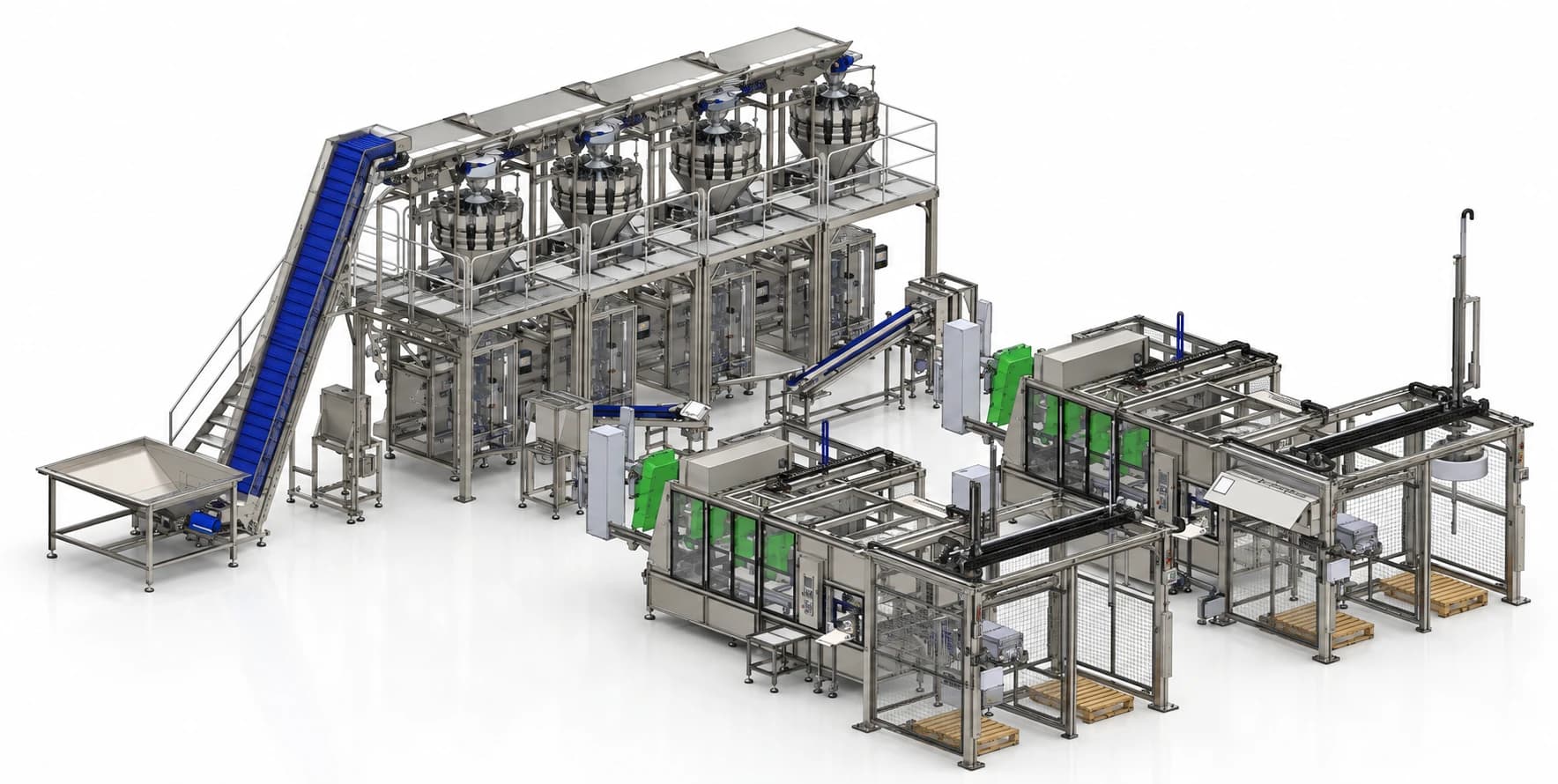
How packs are prepared for shipping depends on the product, the pack type and what your customer expects. We build bundling, case packing and shrink wrapping machines.
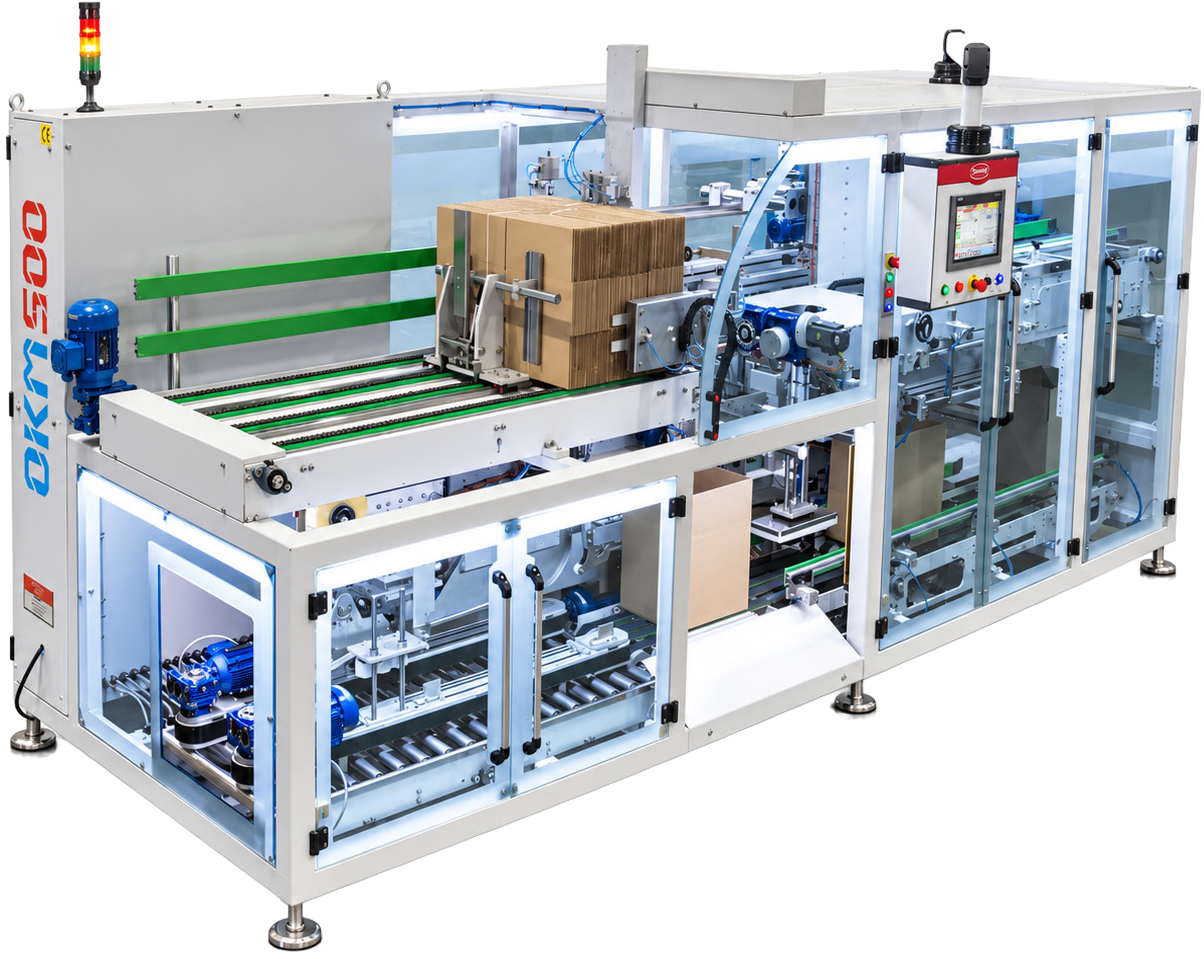
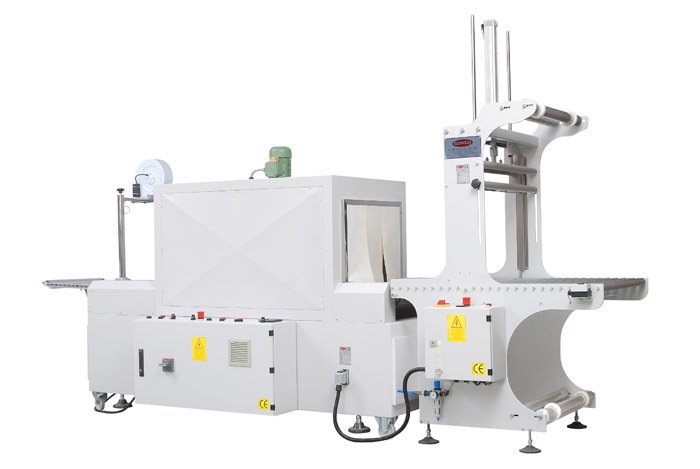
On the OBM 130, packs go through these steps from the packaging machine outfeed to the bale outfeed.
Packs from one or more packaging machines are taken into the machine by conveyor.
A servo counter and distributor count the packs and arrange them in the required pattern.
Packs are grouped by the number and layers required in the bale.
LDPE film from the reel becomes the bale bag and the pack group is filled into it.
The bale bag is heat-sealed, forming a tight, sturdy bale.
The finished bale moves on the outfeed conveyor to shipping, case packing or palletising.
Here is how the three end-of-line methods differ. The final choice is made with your product, pack and shipping conditions.
| Criterion | Bundling | Case packing | Shrink wrapping |
|---|---|---|---|
| Outer packaging | LDPE bale bag | Corrugated case | Heat-shrink film |
| Suitable products | Pillow and gusseted pouches | Pouches, doypacks, jars, tins and boxes | Groups of cases, trays, bottles and jars |
| Best for | Lower secondary packaging cost than cases | Sturdy stacking, every pack type | Holding groups together and protecting them |
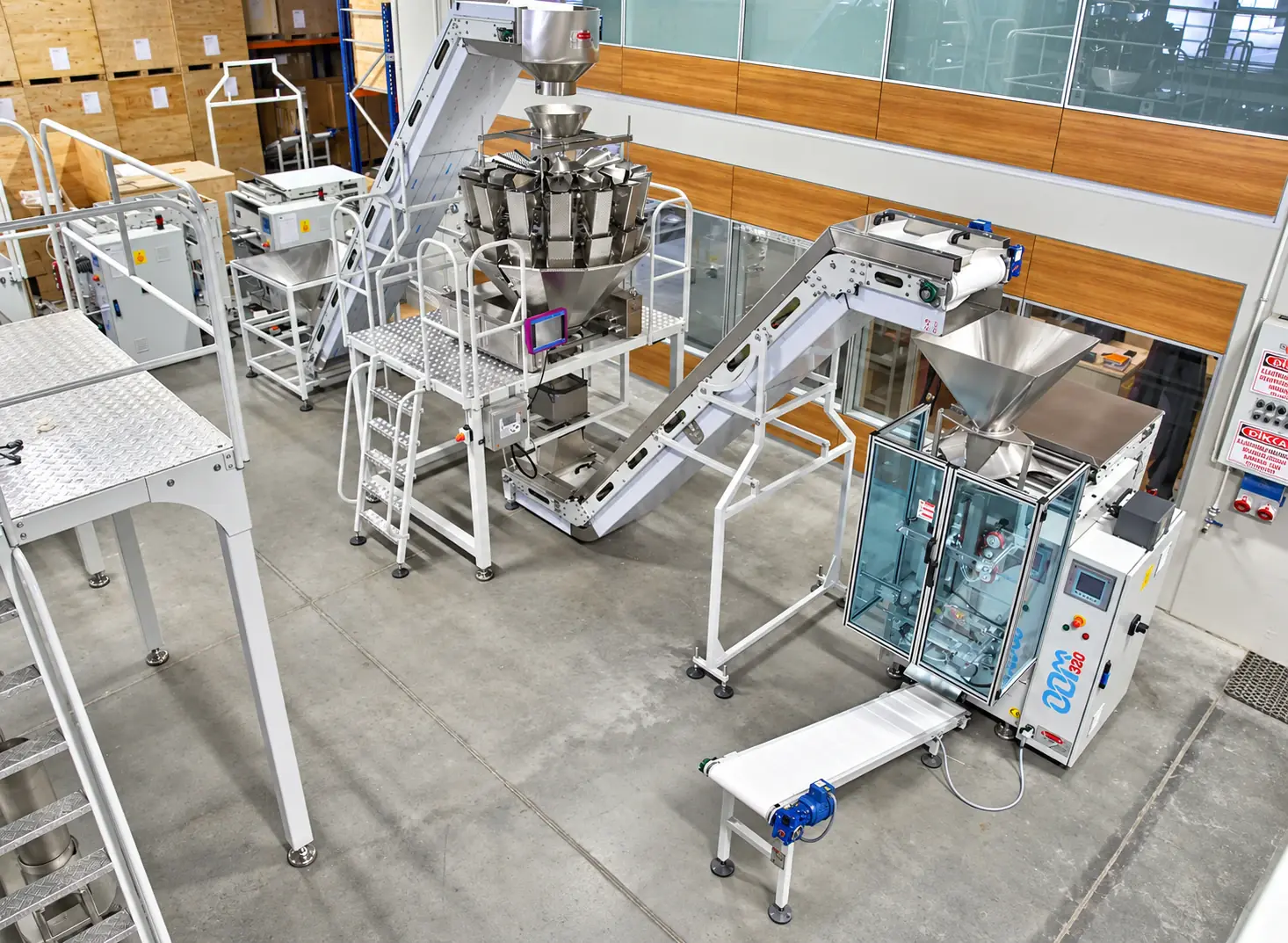
The bundling machine connects to the outfeed of vertical packaging machines and collects the packs at one point. It can be fed by more than one packaging machine, and case packing and palletising can be added at its outfeed for a hands-free, fully automatic line from filling to shipping.
It counts the small packs coming from packaging machines, groups them in the required pattern and fills and seals them into an outer bale bag, so packs are ready to ship without cases.
Pillow and gusseted (stand-up) packs. The OBM 130 bundles packs of 200 g – 5 kg with a width between 120 and 280 mm.
Bundling puts packs into an LDPE bale bag, case packing into a corrugated case. Bundling lowers secondary packaging cost compared with cases; case packing is used for every pack type and rigid containers.
The bale bag is made from the reel, from LDPE film at least 75 microns thick.
The OBM 130 makes 4–6 bales per minute. A bale weighs at most 30 kg and measures 450 x 650 x 200 mm.
Yes. The machine is designed to run in sync with your packaging machines and can be fed by one or more of them.
Share your product, pack type and size, packs per bale and target capacity; our engineers will recommend the right end-of-line solution.
Get a bundling machine quote